Knowing if a plant needs water or already has too much is one of the most common doubts when caring for indoor plants. The difference is in the texture: if the leaves are drooping but soft and the soil is moist, it's usually overwatering; if the leaves look sad but crispy and the soil is dry, observing leaves and soil at the same time usually gives you the answer. Identifying these visual signs helps make routine adjustments successful.
Feeling like watering is a mystery is something that happens to all of us. One day the plant looks fine and the next it seems droopy, which makes us doubt every drop of water we give it. The first thing we want to tell you is that there's no fixed rule for every home; learning to distinguish what your plant is asking for is the first step to understanding them better and caring with less fear.
How to differentiate the signs
Sometimes plants use the same signal (like drooping their leaves) to say different things. To avoid guessing, we can observe these details that tend to be very clear:
If it's overwatering (too much water)
- Leaf texture: They feel weak, heavy, and a bit "mushy" or slimy.
- Color: Dark brown or black spots often appear that feel soft to the touch.
- The soil: If you stick a finger in and the soil sticks like mud, or if after several days it's still very wet.
- Smell: In some cases, the pot may give off a musty or stagnant soil odor.
If it's underwatering (too little water)
- Leaf texture: They feel thin, without body, and if you bend them slightly, they feel crispy or like paper.
- Color: The tips tend to turn straw-colored or light brown and break easily.
- The soil: It looks grayish, feels hard, and often pulls away from the pot walls leaving a gap.
- Weight: When you pick up the pot, it feels very light, almost as if it were full of air.
Quick observation guide
If you don't know what decision to make, try comparing what you see with this list:
- If you see yellow leaves throughout the plant: It's often too much water.
- If you see yellow leaves only at the bottom: It's usually the plant's natural cycle.
- If the plant is drooping but the stem is firm: It almost always needs a good watering.
- If the plant is drooping and the stem is black or soft: It's a sign there's too much water.
Steps to correct course
Once you identify what's happening, let's make these adjustments step by step:
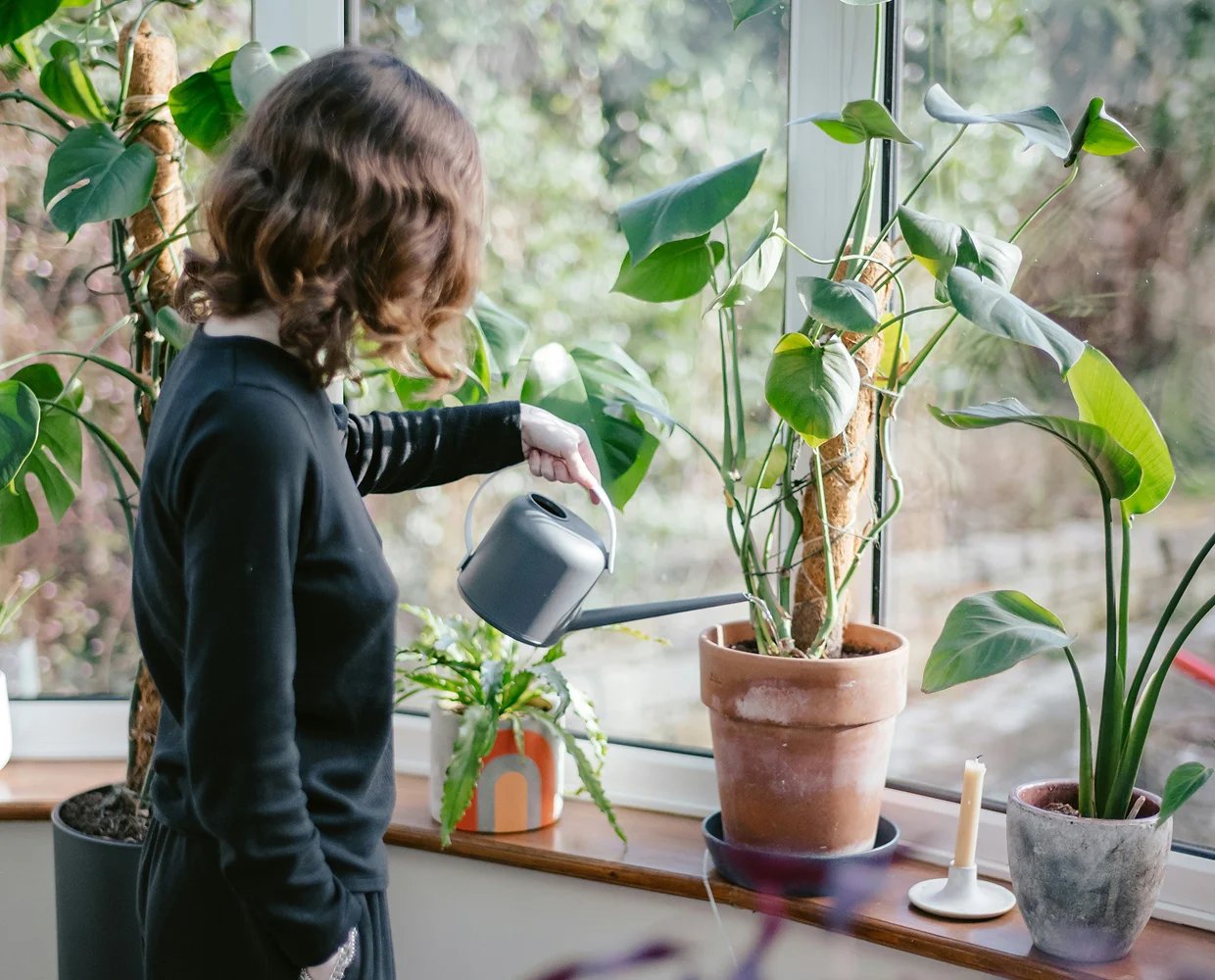
- Use the finger test: Before watering, touch the soil. If the first two or three centimeters are dry, it's time to water. If not, wait a couple of days.
- Don't water by calendar: Climate changes a lot depending on where you live. One day there's lots of sun and the next it rains; the plant doesn't always need the same amount of water. Learn to check the soil instead of watering "every Monday."
- Ensure water can drain: Check that the drainage hole in your pot isn't blocked. If there's a saucer underneath, pour out the excess water after watering so the roots don't end up swimming.
- Consider your local climate: If you live in a very humid place, water will take longer to dry. If you're in a very arid area, you might need to water more frequently than general guides suggest.
Frequently asked questions (FAQ)
Is it better to water a little many times or a lot fewer times?
The ideal approach for most indoor plants is a deep watering (until water comes out the bottom) and then waiting for the soil to dry before repeating. Watering "a little bit" every day tends to leave the bottom roots dry and the surface always moist, which attracts gnats.
Why does my plant have yellow leaves if the soil is dry?
This usually happens because the plant has suffered a lot of stress. When the lack of water is extreme, the plant sacrifices its leaves to survive. Give it a slow watering and observe how it reacts.
Does the type of water matter?
In many areas, tap water has a lot of chlorine or salts. This can cause the tips to look dry. Often, letting the water sit for a full day before using it helps make it gentler for your plant.
If my plant is wilted should I add fertilizer?
Better to wait. Fertilizer is food, not medicine. If the plant is stressed from lack or excess of water, fertilizer can burn its roots. First, help it regain its firmness.
Learning to read the language of water is a process that takes time, but seeing how your plant responds to a good adjustment is enormously satisfying. If you want to feel more confident with every watering and better understand the rhythms of your plants at home, tools like Helia accompany you so you can observe with clarity and care with confidence.